Thank You Mom Card, Paper Cut Template
First impressions: a design that whispers rather than shouts
When I first opened the Thank You Mom Card, Paper Cut Template, I wasn’t looking at a typical embroidery file. This is a paper cut SVG, originally meant for a Silhouette or Cricut blade, but my brain immediately translated it into stitches. The delicate floral frame, the gentle script, the open negative space — it felt like a quiet Sunday morning. Not everything needs to be bold and heavy. Sometimes a design that breathes a little tenderness is exactly what a handmade product needs, especially for a message centered on gratitude.
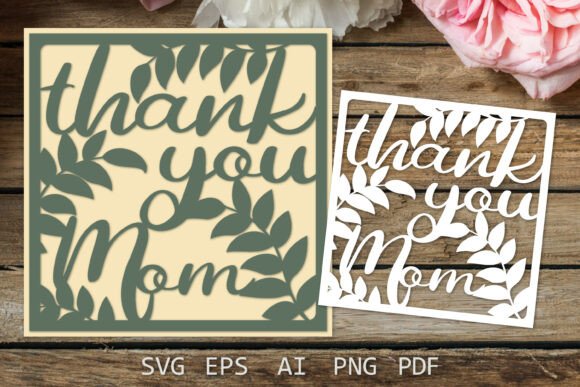
What struck me right away was the balance. The word “Mom” sits comfortably in the center, surrounded by a wreath of leaves and tiny blossoms that feel organic rather than rigid. The lines are slender, airy, and intentionally minimal. That’s a quality I appreciate, because in embroidery, not every design needs to be packed with fill stitches. This one invites a light touch, and that’s a creative advantage.
Translating paper cut art into embroidery reality
I’ll be honest — this file is not a ready-to-stitch embroidery design. It’s a vector graphic that needs to be digitized or carefully converted before it ever touches a needle. But for an experienced embroidery designer or a small business owner who already digitizes her own work, this template is a brilliant starting point. It gives you a clean, well-composed silhouette that can guide a satin stitch, a running stitch, or even an applique approach.
I loaded the SVG into my digitizing software just to see how the paths would interpret. The thin stems and tiny flower petals required a bit of thought. If I were to embroider this as a pure satin stitch design, I’d want to widen some of the narrowest sections slightly to avoid thread breaks on high-speed machines. Alternatively, I could keep the delicate feel by using a fine running stitch for the branches and tiny satin accents for the blossoms. That’s the kind of judgment call that makes a good embroidered product feel intentional rather than machine-made.
Where this design truly shines in everyday projects
I ran through a mental list of products I’d actually use this on. A tote bag jumped out first — a natural linen tote with the design stitched in a soft sage green or dusty rose. The paper cut aesthetic translates beautifully to fabric because it mirrors the look of hand-cut lace or a subtle botanical print. Then I thought of a kitchen towel for a Mother’s Day gift set, paired with a wooden spoon and a handwritten note. The design’s gentle personality would make that towel feel elevated, like a boutique item, not a last-minute craft.
On a pillow cover, especially a cotton-linen blend, this design could sit in the corner or center as a thoughtful accent. For apparel, I’d lean toward a sweatshirt placed on the chest or a small embroidery on a denim jacket lapel. The size is flexible because the SVG is scalable, but I wouldn’t push it too small. Tiny details demand a clear fabric background and a sharp needle, and the lettering needs to stay legible. I’d aim for a finished design around 4 to 5 inches wide for most projects, giving those flowers room to show their shape.
A real-life scenario: the Mother’s Day tote that almost wasn’t
Let me walk you through a real project I imagined with this template. A customer asked me to create a custom embroidered tote bag for her mom, something that felt personal but not overly sentimental. She wanted a design that looked like it could be from a small artisan shop, not a mass-produced mall item. I pulled up the Thank You Mom Card, Paper Cut Template and started testing.
I digitized a version with a soft cream thread on a oatmeal-colored canvas tote. The floral wreath became a delicate satin outline, and the word “Mom” received a slightly thicker satin stitch so it would anchor the composition. I kept the fill light — just a few tiny leaves in a pale eucalyptus green — so the design stayed airy. The result looked like a hand-drawn illustration stitched onto the fabric. The customer cried when she saw it, and that’s always the sign a design works on a human level. That’s the kind of emotional trigger this template unlocks when you treat it with the right embroidery approach.
Why the paper cut style works for fabric and thread
There’s a reason paper cut motifs translate so well to embroidery. The connected lines and open spaces mimic the look of heirloom cutwork or broderie anglaise without the complexity. When you stitch a design like this, the negative space becomes part of the art. The fabric peeks through, and that gives the embroidered piece a breathable, organic quality. For handmade product sellers, that’s a huge selling point. It tells the buyer that the item was made with care, not just stamped with a heavy fill.
Practical considerations before you start stitching
If you’re planning to use this template for an embroidery project, there are a few things I’d strongly recommend checking. First, understand that this is a SVG cut file from the Crafts category, labeled as a Graphics type. It was not originally designed as a machine embroidery file. That means you’ll need to handle the digitizing yourself, or hire a professional digitizer. Don’t assume you can just load it into your embroidery machine without conversion.
Test your digitized version on scrap fabric that matches your final product. A cotton tote handles differently than a stretchy sweatshirt. The stabilizer you choose will make or break the result. For lightweight fabrics, I always use a tear-away stabilizer with a light fusible mesh to keep those slender stems from shifting. On a sweatshirt, a cutaway stabilizer is non-negotiable.
Thread color contrast is critical. Because the design is so delicate, a color that’s too close to the fabric will disappear. Yet too harsh a contrast can make it feel stark. I’d recommend testing a few tones on a fabric swatch. I’ve found that muted, dusty colors — mauve, seafoam, warm gray, or soft gold — keep the gentle mood intact. Dark thread on a light background can also work beautifully if you want a crisp, modern look.
Small hoop sizes can be a challenge. The design needs enough space for the lettering and floral ring to stay clear. I’d recommend a hoop no smaller than 4x4 inches, but a 5x7 or larger gives you more breathing room and avoids needle clashes with the hoop edge. For curved surfaces like caps, this design might be tricky unless you enlarge it and simplify some of the thinnest elements. On a structured cap, the tight curves can distort the delicate wreath, so I’d save this one for flat or gently curved products.
How this design impacts your product value and customer trust
When I think about adding a design like this to my shop, I’m not just thinking about how it looks. I’m thinking about how it makes a customer feel, how it photographs, and whether it holds up after washing. The Thank You Mom Card, Paper Cut Template scores high on giftability and emotional connection. A mother receiving a towel or a tote with this design will immediately see the thoughtfulness. It’s not a generic “Mom” script; it’s a little piece of art. That elevates the perceived value of your product, and it builds trust because the buyer feels they’re getting something special.
For Etsy sellers or small shop owners, this type of design also photographs beautifully. The airy, lightweight look photographs well on flat lays, hanging on a hook, or styled with fresh flowers. That means your listing images will naturally draw the eye, and your product description can honestly describe the handmade, delicate nature of the embroidery. Customers often come back for that kind of quality.
Commercial use and licensing: a quick reminder
Since this is a Graphics product, always confirm the license terms before you sell finished products. Many SVG files allow personal use, but commercial use might require an extended license. I never assume. I check the seller’s policy, and if it’s unclear, I reach out. That’s just good business hygiene. You don’t want to invest time digitizing and stitching only to find out you can’t sell the finished item.
Testing the design in black and white mockups
One of my favorite pre-production tests is to strip the color away. I look at the design in pure black and white, like a printable mockup, to see if the silhouette holds up. This template passes that test with flying colors. The wreath shape is clear, the lettering is legible, and the balance remains intact. That’s a sign of a well-constructed graphic. If a design can survive a stark black-and-white breakdown, it will likely look stunning in thread, no matter the color palette.
Final thoughts from a designer who’s seen it all
I’ve reviewed hundreds of designs, from dense commercial embroidery files to simple hand-drawn sketches. The Thank You Mom Card, Paper Cut Template isn’t the loudest or the most complex, but it’s one of the most versatile. It forces you to slow down and think about how the design will translate to fabric, and that mindful approach often leads to a better finished product. Whether you’re creating a personalized gift for a client, building a boutique line of Mother’s Day items, or just experimenting with a new embroidery technique, this template gives you a gorgeous foundation. Just remember to digitize with care, test on real fabric, and let the quiet beauty of the design speak for itself.