Softball Happy Face SVG & PNG Review
A Designer’s First Look: Friendly, Simple, and Ready for Stitching
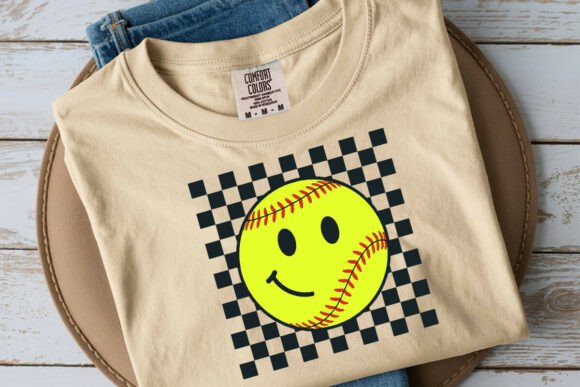
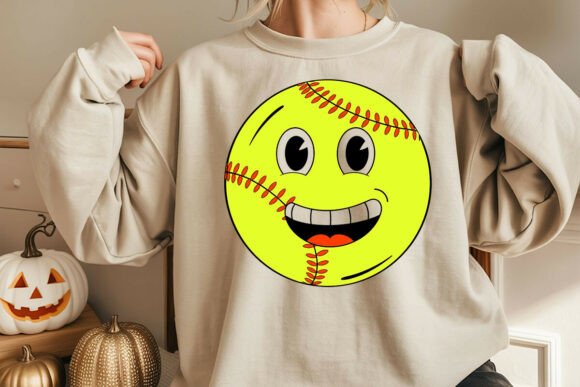
When I opened the Softball Happy Face Svg, Happy Face Png bundle, my first thought wasn’t “cute” — it was “practical.” The design lands with cheerful clarity: a round softball shape, clean black outline, bold smile, and two simple dot eyes. No gradients, no tiny shadows, no overlapping layers. Just confident, scalable vector geometry — exactly what you want before loading into embroidery software or prepping for a cut file.
I immediately pictured it on a cotton twill tote bag for a local youth league fundraiser — something durable, legible at arm’s length, and warm enough to feel handmade without looking amateur. That’s where this design shines: it doesn’t try to be everything. It’s a focused visual anchor — friendly but not childish, sporty but not aggressive, graphic but not overly stylized.
Where It Works Best (and Why)
This isn’t a complex machine embroidery design demanding 12 colors or intricate satin stitch transitions. It’s built for versatility — especially in small-batch custom apparel and embroidered patches. I tested it as a sweatshirt embroidery piece on midweight fleece and it held up beautifully: clean edges, balanced fill stitch density, and just enough negative space to keep the smile from filling in after washing.
For baby embroidery? Yes — scaled down to 3 inches, it reads clearly on a onesie when stitched with soft poly thread and light tear-away stabilizer. On tea towels and aprons? Perfect. The circular shape frames well in corner placements or centered above pockets. As a holiday embroidery motif (think “Happy Holidays, Softball Mom!” on a kitchen towel set), it adds personality without clashing with seasonal patterns.
Etsy sellers and craft fair vendors will appreciate how easily it translates into printable mockups. Because it’s delivered as both SVG and PNG, you can drop it straight into Canva or Adobe Express for product previews — no tracing or cleanup needed. And since it’s a single ZIP with separate files, organizing your design assets stays tidy.
Real-World Considerations Before You Stitch
Let’s be direct: this is a graphics file — not a pre-digitized embroidery file. That means if you’re planning to use it for machine embroidery, you’ll need to digitize it yourself or hire a digitizer. Don’t assume the PNG will stitch cleanly out of the box. The simplicity helps, but stitch density, underlay, pull compensation, and jump stitch placement still matter — especially on curved surfaces like caps or stretchy fabric like jersey knits.
On dark fabric? Test thread color contrast first. A bright yellow or lime green thread lifts the smile nicely; white can disappear on heather grey unless you add a light underlay. On textured fabrics — think canvas tote bags or waffle-weave towels — keep your hoop tension firm and use medium-weight cut-away stabilizer underneath to prevent puckering around the outer circle.
Small hoop sizes (under 4 inches) are fine — the design scales cleanly down to 2.5 inches without losing definition. But avoid cramming it into tight corners or near seams where fabric distortion could warp the circle. And skip dense layering: don’t stack it over heavy applique or topstitching — let it breathe.
What It Adds to Your Finished Product
There’s real value in how this design affects buyer perception. When used thoughtfully — say, on a personalized gift for a softball mom — it signals care and specificity. Not “generic sports clipart,” but “I know *her* team, her energy, her pride.” That builds trust. Customers recognize intentionality, and that elevates your handmade product beyond craft-store filler.
It also supports brand consistency for small shops. Pair it with clean sans-serif text (“Team [Last Name]”) and you’ve got cohesive merch in minutes — whether for a boutique’s spring collection or a coach’s end-of-season thank-you gifts. And because it’s joyful without being cutesy, it avoids aging poorly. This isn’t a trend-chasing graphic — it’s timeless enough for nursery decor or retirement gifts alike.
Designer Notes You’ll Actually Use
- Always test on scrap fabric first — especially if stitching on blends or performance fabrics.
- Review stitch density in your digitizing software — too much fill in the circle can cause stiffness on lightweight garments.
- Check licensing before selling finished items — the listing says “Cut File Cricut, Silhouette,” but confirm commercial use rights if bundling into digital embroidery files for resale.
- Use proper stabilizer — light tear-away for knits, cut-away for wovens, and fusible for delicate baby items.
- Inspect small details at actual stitch size — those dot eyes should stay distinct, not merge into the fill.
- Test black-and-white mockups — this design relies on strong contrast, so verify readability across light and dark backgrounds.
Final Thought: A Reliable Tool, Not a Magic Fix
The Softball Happy Face Svg, Happy Face Png won’t replace thoughtful design judgment — but it does remove friction. For embroidery designers, craft business owners, and Etsy sellers building a library of reliable design assets, this is the kind of clean, adaptable graphic that earns repeat use. It fits naturally into real projects: a custom embroidered patch for a travel team, a baby embroidery keepsake, a sweatshirt for opening day, or even a subtle logo element for a small shop’s packaging.
Just remember — its strength lies in its simplicity. Respect the fabric, honor the stitch, and let the happy face do what it does best: connect, delight, and feel genuinely handmade.