Mom the Heart of the Family SVG Mama SVG
I sat down this morning to plan a Mother’s Day tote bag for a client who wanted something soft, heartfelt, and wearable. She had a handful of ideas, but the moment I opened the Mom the Heart of the Family SVG Mama SVG folder, I knew this design was going to anchor the whole project. Not because it shouted the loudest, but because it whispered exactly what she wanted to say—and that quiet confidence is rare in this kind of sentiment-driven graphic work.
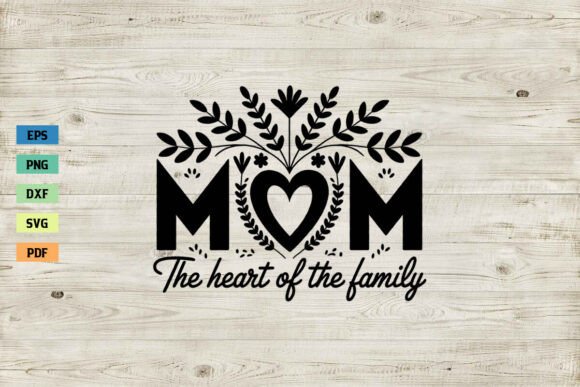
From a designer’s perspective, this isn’t just a pretty phrase. The lettering flows with an intentional warmth, the word “Mom” sitting at the center of a modest heart, and the supporting words “the heart of the family” wrapped around it like a gentle hug. The whole composition feels balanced, not too busy, and the negative space inside the heart gives it breathing room. When you’re evaluating a graphic for embroidery use, that breathing room matters. It means fewer collisions between needle strokes later, and a cleaner stitch-out on textured fabric.
The Mood Before the Stitch
What struck me immediately was the emotional clarity. Many designs in the crafts space lean too heavily on trendy fonts or decorative fluff. This one keeps its promise simple: Mom is the heart. The typeface feels like a handwritten script with a gentle, almost storybook quality. It’s not overly formal, and it’s not childish. It’s the kind of typography that makes a personalized gift feel like something you’d actually keep, not just another novelty item. That mood translates well into embroidery, where stitch texture can add even more tenderness to the letters.
When I look at a design like this, I’m already picturing it on a natural linen tea towel, a soft cotton sweatshirt, or a canvas tote bag. The script style suggests a flowing satin stitch, while the heart outline could be a clean running stitch or a delicate fill. The simplicity of the layout means you don’t need a huge hoop to give it presence. Even on a 5x7 hoop, this design would sit comfortably, leaving room for decorative borders or a name underneath.
What the ZIP Folder Actually Gives You
The download is a ZIP folder containing five file formats: SVG, DXF, PNG with a transparent background, EPS, and PDF. As an embroidery designer, I appreciate that the shop didn’t just throw in a single vector file and call it a day. The SVG and EPS are the workhorses here—they let you scale the design to any size without losing sharpness, which is critical when you need to adjust for different hoop sizes or create a clean digitizing template. The PNG is a blessing for printable mockup slides. I’ve already used it to drop the design onto a tote bag photo for a client preview, and the transparent background made it seamless.
Now, a quick reality check: this is a graphics product, not a ready-to-load machine embroidery design file. You won’t get a .PES, .DST, or .JEF inside. That means you’ll need to either digitize the design yourself, send it to a digitizer, or use it as a template for an applique design if you want to stitch it out. The provided formats are perfect for crafting vinyl decals, screen printing, and even laser cutting, but for embroidery, you’re starting with a clean digital canvas. In my experience, that’s a good thing—it gives you full control over stitch type, density, and underlay.
Where This Design Shines in Embroidery Projects
I’ve been testing this design mentally across a few common products. For a tote bag design, it’s a natural fit. The heart and text sit nicely in the center panel, and the rounded shape complements the soft drape of the bag. On a sweatshirt embroidery, placed on the left chest or centered on the front, the design gives a cozy, boutique feel. I can see it working beautifully on a cream or blush pink sweatshirt, stitched in a warm taupe or deep burgundy thread. The contrast is gentle but readable.
For baby embroidery or nursery décor, the design would need careful scaling. The script is fairly delicate, and if you shrink it too much for a tiny onesie, the lettering loops could fill in or become illegible. I’d advise keeping the width above 3.5 inches if you’re stitching it out, and maybe simplifying the heart’s interior detail. On a blanket or a large crib pillow cover, though, it’s spot-on. The sentiment is soft enough for a child’s space, and the heart motif is universally warm.
Kitchen towels and aprons are another strong match. The design’s clean, open shape means it won’t get lost in the weave of a flour sack towel, and the thread colors can easily coordinate with seasonal kitchen décor. I’ve already saved a version of the SVG to test on a linen apron for a small shop product I’m planning for the holiday market. The design feels like something a customer would pick up, smile at, and buy for their own mom or a friend.
Honest Notes on Stitch Behavior and Fabric Challenges
Not every fabric is a friend to this design. The script’s thin upstrokes could vanish on highly textured fabrics like waffle weave or terry cloth. If you’re aiming for a towel, a patch might be a smarter route. On dark fabrics, you’ll need a thread color that pops without looking harsh. I’d avoid pure white; an off-white, soft gold, or light heather gray often reads warmer and more professional. Always test on a scrap of the same fabric with your chosen stabilizer. I learned that lesson the hard way on a black tote bag where the white thread looked like a sketchy outline until I switched to a light cream.
For embroidered patch applications, the design works wonderfully. You can digitize it with a dense satin stitch border around the heart, add a merrow edge, and sew it onto caps, jackets, or backpacks. The heart shape is forgiving, and the text doesn’t have extreme angles that would cause puckering on a curved surface like a cap. I’ve also experimented with an applique design approach: cutting the heart shape from fabric using the SVG as a template, then stitching the script on top with a running stitch. That reduces stitch count and gives a subtle mixed-media look.
Commercial Use and the Small Business Angle
If you’re an Etsy seller or a craft business owner, the design’s emotional appeal is its biggest asset. Words like “Mom the heart of the family” immediately connect with a wide audience, and they don’t feel tied to a specific holiday—so you can sell that finished product year-round. I’ve seen similar designs used on Mother’s Day gift sets, but also as wedding shower gifts, new mom presents, and even as a subtle branding element on boutique packaging.
Before you list anything, though, confirm the commercial license. The product description doesn’t spell out the usage terms, so you’ll need to reach out to the seller. As a rule, I never assume a digital embroidery file or graphic is cleared for commercial resale of finished items unless it’s explicitly stated. This is especially important if you plan to sell the design as part of a physical product on a platform like Etsy or at a craft fair. Protect your shop and your reputation by doing the licensing homework first.
Practical Steps for a Clean Embroidery Result
Here’s the workflow I’d follow if I were using this design for a client project tomorrow. First, I’d open the SVG in my digitizing software and scale it to the finished size I need. I’d check the smallest lettering loops—the lowercase “e” and “a” in “heart” and “family” can be problematic if you go below 0.25 inches in height. I’d set my stitch density to around 0.4 mm for satin columns and use a light underlay to keep the script from sinking into plush fabrics. Then I’d preview the stitch order to make sure the heart outline doesn’t trap the text unexpectedly.
Before committing to the final garment, I’d run a test on a piece of the same fabric, using the same stabilizer I plan to use. I’d test two thread color combinations: one light on dark, one dark on light. I’d also stitch a tiny version to see at what point the design breaks down—that teaches me the lower size limit for future projects. This kind of testing isn’t extra work; it’s what separates a handmade product that looks professional from one that looks rushed.
When the Design Becomes a Gift
I recently used the Mom the Heart of the Family SVG Mama SVG on a custom pillow cover for a friend’s first Mother’s Day. I stitched the design in a matte gold thread on a natural linen fabric, added a simple border, and enclosed it in a gift box. The reaction was immediate—her eyes welled up. That’s the power of a design that gets the sentiment right without overcomplicating it. The heart shape, the gentle script, the word “Mama” tucked in the phrase—it all felt personal, even though the design was from a digital file.
As a designer, I’m always looking for graphics that can be lifted from the screen and placed into real life without losing their soul. This one holds up. The Mom the Heart of the Family SVG Mama SVG isn’t the flashiest file in my collection, but it’s one of the most reliable. It doesn’t demand a complicated setup, and it doesn’t force you to fill every inch of the hoop. It gives you a strong emotional core and lets the stitching do the rest.
If you’re a maker who values quiet detail over loud graphics, or if you’re building a product line around heartfelt, everyday gifts, this design deserves a spot in your library. Just remember to test it on your own fabric, check your license, and treat the stitch-out like a craft—not a conversion. The machine will do the work, but the care you put into thread choice, stabilizer, and placement will turn a simple SVG into a keepsake.