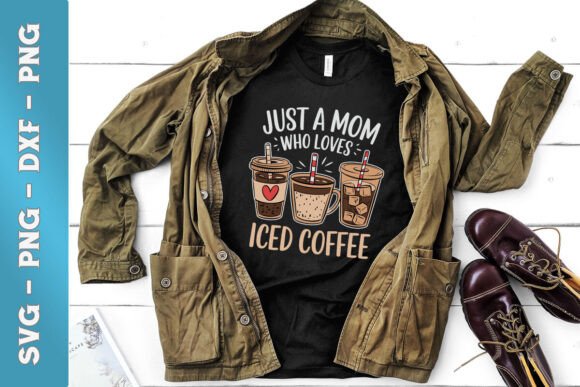
Just a Mom Who Loves Iced Coffee SVG
There’s a certain kind of phrase that feels like a warm mug in your hands on a chaotic morning. Just a Mom Who Loves Iced Coffee SVG lands exactly there. It’s playful, a little self-deprecating, and instantly connects with anyone who knows the lifeline that a cold brew can be. As an embroidery designer, I’m not just looking at a cute line of text. I’m mentally pulling it into my digitizing software, rotating it, test-stitching it on a scrap of canvas, and imagining how it will actually read after a hundred stitches settle into fabric. This design, originally a digital cutting file for Cricut and Silhouette machines, has a lot of untapped potential for machine embroidery, but it takes a specific eye to get it right.
I’ve reviewed thousands of graphics for embroidery conversion, and the first thing I check is whether the shape and layout will hold up under needle and thread. The lettering here is casual, almost hand-brushed in feel, which gives it personality. But personality in an SVG can quickly turn into a stitching nightmare if the details are too thin or the kerning is too tight. As a digitizer, I’d be inspecting every curve, every connection between letters, and every ending stroke. Before I even open my embroidery software, I’m asking: will this machine embroidery design look as good on a cotton tee as it does on a screen?
The Mood and the Merchandise Potential
This design carries a specific mood—relaxed, relatable, and a little bit cheeky. It’s not shouting for attention; it’s more like a quiet inside joke between moms who understand the struggle. That makes it a powerhouse for custom apparel and personalized gift items. Picture a soft, heather grey sweatshirt with this phrase stitched across the chest in a deep navy thread. Or a crisp white kitchen towel with a subtle satin stitch outline. The phrase has a lifestyle vibe, not a novelty one, which means it fits naturally into boutique offerings, not just a one-off gag gift. I can already see a small shop owner bundling this with a matching coffee-themed mug or a set of embroidered coasters.
For Etsy sellers and craft business owners, the design’s emotional hook is pure gold. It’s specific enough to attract a niche audience—moms who love iced coffee—but broad enough to work for baby showers, Mother’s Day, or just a treat-yourself kind of purchase. The key is translating that digital graphic into a stitch file that keeps the same breezy energy without losing readability.
Real Project Test: The Tote Bag That Started It All
Let me walk you through a real use case. I had a client who wanted a line of embroidered patch totes for a local coffee shop pop-up. She handed me this SVG and asked if it could be stitched onto a canvas tote bag as a patch, then sewn onto the front. I said yes, but only after a careful digitizing pass. The original SVG had some delicate thin strokes around the “iced coffee” script that I knew would collapse under a dense satin stitch. I converted the design into an applique design with a satin stitch edge, using a light tan fabric for the coffee cup and a clean white fill stitch for the lettering. The result was a chunky, dimensional patch that felt premium and handmade. That’s the kind of transformation that makes this SVG a smart asset for small shop product lines.
When you’re working with an SVG not originally made for embroidery, you have to be the bridge between the graphic and the garment. The stitch density needs to be adjusted, lettering may need to be thickened, and small decorative elements might need to be simplified or removed. I always recommend testing the design on a similar fabric with the exact stabilizer you’ll use in production. For a tote bag, a cutaway stabilizer is non-negotiable. For a t-shirt, a no-show mesh works wonders. The hoop size also matters—this design, depending on how you scale it, can fit a 4x4 hoop if you keep it compact, but it truly shines in a 5x7 or larger, where the lettering can breathe.
Where the Design Blends Perfectly (and Where It Doesn’t)
I’ve learned over the years that not every great design belongs on every surface. Just a Mom Who Loves Iced Coffee SVG has a natural home on flat, medium-weight fabrics. Think sweatshirt embroidery, unisex tees, canvas pouches, and tote bag design projects. It also performs beautifully on linen or cotton blend kitchen towels, giving a rustic, farmhouse feel. Pillow covers and simple aprons are fair game too. The text orientation is horizontal and fairly compact, so it doesn’t warp weirdly when someone wears it.
However, I’d be cautious with anything too stretchy or ribbed. Baby onesies, for example, are adorable but the fabric’s stretch can distort the text if you aren’t using a heavy fusible stabilizer. Baby embroidery with this design is possible, but I’d scale it down and use a dense underlay. On curved surfaces like caps, the straight line of text can look awkward unless you arc it in your digitizing software. That’s an extra step, but doable. I’d also avoid super dark fabrics without testing thread contrast first. A soft pastel thread on black can look amazing, but if the lettering is too thin, it might get lost. Always run a black-and-white mockup in your embroidery editor to check contrast.
Thread, Texture, and the Wash Test
Here’s a quick checklist I go through before approving any design for a client’s line:
- Thread color contrast: I test three thread palettes—neutral, high contrast, and tonal. The design needs to pop without screaming.
- Stitch type selection: For the main text, a satin stitch works beautifully at about 6-8mm wide. For the iced coffee graphic, I might use a fill stitch with a satin border to give it a clean edge.
- Fabric texture: A napped fabric like fleece can swallow small details. I’d use a topper to keep the stitches crisp.
- Washability: A handmade product that falls apart after three washes is a return waiting to happen. I stitch a sample and run it through the laundry five times. This design, when digitized correctly, holds up well because the text is not overly intricate.
One thing I appreciate about the SVG is that it’s a single cohesive phrase. There’s no distracting secondary text or complicated framing. That simplicity makes it easier to maintain stitch quality. For embroidery file conversion, you can often get away with a single color thread if you want a minimalist look, or use two colors to separate the mom-relatable text from the iced coffee element. I’ve seen a version where “iced coffee” was stitched in a metallic light blue that looked like melting ice—it was a hit on holiday embroidery gifts.
The Business Mindset: From File to Finished Product
If you’re a digital product seller or a creative entrepreneur, you’re probably thinking about how this design can expand your catalog. While the original listing is for a cutting file, the graphic itself can be a valuable design asset for creating digital embroidery file products. You would digitize it yourself and sell the stitch file, or you could use it to create printable mockup images for your shop. But you must check the licensing. The product description mentions it’s compatible with Cricut and Silhouette, but it doesn’t spell out commercial embroidery rights. Before you sell a single finished item, confirm that the license allows for commercial embroidery use. Many cut file licenses are for personal use only or limited to physical products, not for reselling digitized versions. I always reach out to the designer if it’s unclear. That one step has saved me countless headaches.
For those who plan to stitch this onto finished product items for craft fairs or Etsy, the design has solid buyer engagement potential. Shoppers who see it on a listing will instantly recognize themselves. The phrase is Instagram-friendly, it photographs well on flat lays, and it’s easy to style with a cold brew and a few scattered coffee beans. That kind of visual storytelling boosts product value and customer trust. A well-stitched version on a boutique branding label makes the whole product feel considered, not just slapped together.
Practical Embroidery Designer Notes
Before you commit this design to a production run, please do the following. I still do this even after years in the business:
- Test on scrap fabric first. Do not trust your screen preview. The actual stitch interaction with the fabric can reveal unexpected gaps or puckering.
- Inspect the smallest details under magnification. If the SVG has tiny dots or flourishes, they might need to be removed for embroidery.
- Check black and white mockups. This reveals if the design relies on color to be legible.
- Test on both light and dark backgrounds. A design that works on white might vanish on charcoal.
- Use the correct stabilizer. For the majority of projects, a medium-weight cutaway is the safest bet.
- Double-check the hoop size your machine can handle. If the design is too large, scale it down, but be aware that scaling down too much can make text unreadable.
- Consider the running stitch underlay. A good underlay prevents the fabric from showing through the satin stitch.
- If you plan to sell the digitized file, verify that you have the right to do so. The original listing is for a Graphics category cutting file, so assume nothing.
I can’t tell you the exact stitch count or the file formats because the SVG itself doesn’t contain that embroidery data. You’ll need to digitize it yourself or hire a digitizer. The resulting embroidery file could be saved as PES, DST, EXP, or whatever your machine requires. I’d recommend a clean, low-density satin stitch for most of the text, and maybe a fill stitch for any solid graphic elements if you add them. Keep the design under 10,000 stitches for a 5x7 area to avoid stiffness on wearables. That’s a ballpark figure from experience, not a rule.
Final Stitch: A Design That Earns Its Place
After putting this SVG through the mental wringer and a few real-world tests, I’d confidently say it’s a keeper. Just a Mom Who Loves Iced Coffee SVG isn’t just a trendy phrase; it’s a small piece of identity that moms will wear, use, and gift. As an embroidery designer, I appreciate that it respects the medium. It’s simple enough to digitize well, yet expressive enough to make someone smile. Whether you’re stitching a batch of custom apparel for a craft business, creating a personalized gift for a friend, or adding a new machine embroidery design to your digital shop, this graphic holds its own. Just remember that the real magic happens in the test stitch, the stabilizer choice, and the thread color that makes the iced coffee practically feel cold. That’s the kind of handmade product detail that turns a hobby into a brand.