But Did You Die Mom Life Groovy Key Chain Review
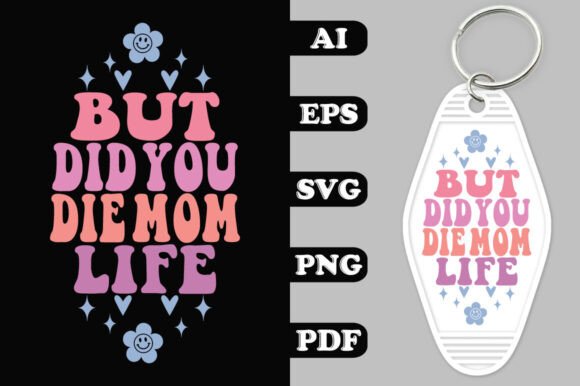
Opening a fresh design file and seeing that retro keychain shape paired with the phrase “but did you die” instantly sets a playful, sarcastic mood. It’s not a delicate floral or a cute baby animal—it’s a badge of exhausted, laugh-through-the-chaos motherhood. The groovy font, the slight wobble in the lettering, and the classic motel-style keychain silhouette all scream vintage personality. As an embroidery designer, I immediately started thinking about how this would translate from screen to stitch, and honestly, the possibilities are exciting. This isn’t just a design; it’s a conversation starter that fits perfectly into the current wave of relatable mom humor graphics.
First Look: Retro Sass in a Small Package
The design blends a chunky, rounded keychain frame with bold, curvy text. The visual weight is well-balanced—the words fill the space without feeling cramped, and the key ring detail at the top adds just enough nostalgia. The overall vibe is a mix of 70s motel signage and modern sarcastic mug sentiment. From a stitched product perspective, that combination is gold. It targets women who laugh at the chaos of parenting, and they’re the same customers who buy embroidered totes, sweatshirts, and patches. The design feels like it was made for craft fair impulse buys and Etsy late-night browsing.
How This Design Fits Into Real Embroidery Projects
I can already picture this on a canvas tote bag carried by a mom who’s running on coffee and dry shampoo. The bold lettering and simplified keychain shape make it an excellent candidate for a clean satin stitch or even a well-executed fill stitch with a contrasting outline. It’s not overly detailed, which is a huge advantage when you’re stitching on textured fabrics like canvas or denim. The design’s width-to-height ratio also works nicely for a standard 5x7 hoop, leaving room for creative placement without forcing you to fight for every millimeter.
From SVG to Stitch: What You Need to Know
Since this comes as a digital graphic—specifically an SVG—you’re not getting a ready-to-stitch embroidery file. That means you’ll need to digitize it yourself or run it through your embroidery software to convert paths into stitch types. I always test a new design like this on scrap fabric first, especially when the original graphic has thin lettering connections or small interior spaces. The keychain SVG’s text isn’t overly delicate, but the “but did you die” phrase has some tight curves that could bunch up if your stitch density is off. A quick test tells you whether to adjust pull compensation or switch to a slightly smaller needle.
Choosing the Right Fabric and Product
This design shines on stable, medium-weight fabrics. Think cotton canvas tote bags, unisex crewneck sweatshirts, and structured aprons. I’d avoid super thin or stretchy materials like tissue tees or ribbed knits because the keychain outline could lose definition. For a boutique product, a retro-style trucker hat with a patch featuring this design would be a brilliant move. The keychain shape naturally fits a patch format, and you can even stitch it on felt, cut it out, and attach it as a removable patch. The vintage motel vibe gets even stronger when you use a cream or off-white thread on a dark olive or rust background.
Why This Keychain SVG Works for Sarcastic Mom Merch
The “mom life” niche is saturated with scripty, sentimental quotes. A design that says “but did you die” with a groovy, unapologetic flair cuts through the noise. It’s funny, it’s a little edgy, and it resonates with a generation of parents who use humor as a coping mechanism. When you stitch this on a kitchen towel, it becomes the perfect gift for a friend who survived toddler tantrums. On a pillow cover, it’s a statement piece for a living room that doesn’t take itself too seriously. The retro keychain motif adds a layer of nostalgia that makes the sarcasm feel warm rather than harsh.
Critical Stitching Considerations
Before you commit to a large batch of products, there are a few technical points to think through. Small hoop sizes might force you to scale the design down, and if you go too small, the key ring detail and the inner text could turn into a muddy mess. I’d recommend keeping the design at least 3 inches wide for clarity. Textured fabrics like waffle weave or terry cloth towels will require a heavier stabilizer and a dense underlay to keep the satin stitches from sinking. Dark fabrics are fantastic for making the groovy white lettering pop, but you’ll need to check your thread contrast on a sample because the retro keychain outline might blend in if you’re not careful with color choices.
Thread Colors and Contrast
I’ve found that the most successful embroidered versions of this design use high-contrast thread pairs. A bright white or cream keychain body with a deep navy or black outline gives that crisp, screen-printed look. If you want a more vintage feel, try a mustard yellow keychain outline with chocolate brown text. Just avoid monochromatic pastels—the sarcasm needs a little bite, and washed-out pinks or lavenders can undercut the attitude. Testing in black and white mockups before stitching helps you see if the design holds up without color distraction.
Hoop Sizes and Placement
For a standard 4x4 hoop, you’ll likely need to shrink the design to fit, and that’s where the keychain’s inner ring detail might become too small to stitch cleanly. I prefer using a 5x7 or larger hoop so the keychain can breathe. Placement on a sweatshirt is best centered on the chest, but don’t underestimate the visual impact of putting it on a lower back patch or even the side of a tote bag. The keychain shape naturally draws the eye, so you can play with asymmetrical placements that feel more curated and less uniform.
Real-Life Scenario: A Groovy Tote for a Mom Friend
Last month, I was brainstorming a birthday gift for a close friend who juggles three kids and a full-time job. She’s the queen of sarcastic comebacks, and I knew she’d appreciate something that wasn’t a generic “best mom” item. I pulled up this keychain SVG, digitized it with a dense satin stitch for the keychain body and a contrasting fill stitch for the text, and stitched it onto a natural canvas tote bag. I used a cream thread for the keychain, a warm olive green for the words, and a thin dark brown outline. The result was a tote that looked like a thrifted vintage find—exactly the vibe she loves. Stitching on the canvas was smooth with a cutaway stabilizer, and the design held its shape beautifully. Seeing her reaction confirmed that designs with personality and a touch of nostalgia are the ones that create real emotional connection.
Practical Tips for Embroidery Designers and Sellers
If you’re planning to use this design for client projects, Etsy listings, or craft fair products, here are a few things I always keep in mind:
- Test on scrap fabric with the exact stabilizer you’ll use for the final products. Don’t assume the design will stitch out perfectly on the first go.
- Check thread color contrast in natural light, not just under your machine’s LED. What looks crisp on screen might look muddy on a finished product.
- Review stitch density after digitizing. The keychain SVG’s nice bold shapes can handle a dense fill, but overly tight satin stitches on the lettering might cause pulling on lighter fabrics.
- Confirm your hoop size and verify that the design fits your machine’s capabilities before you start digitizing.
- Inspect small details like the key ring circle and the inner curves of the letters. A tiny adjustment in your embroidery software can save you from thread breaks or messy outlines.
- Test on both light and dark backgrounds. The design can look completely different, and you want to know which combination sells best.
- Use proper stabilizer for the fabric type. A cutaway stabilizer is almost always your friend for wearable items, while a tear-away works for flat, stable decor pieces.
- Check licensing before selling finished items or digital products. Since this is a graphic file, you need to be absolutely sure the commercial use terms allow you to stitch it on physical products and sell them. If you’re offering the digitized embroidery file for download, extra licensing may be required.
Final Thoughts: Does It Deserve a Spot in Your Collection?
After spending time with this design, I’m confident it’s a strong addition to any maker’s lineup who serves the mom humor, retro, and sarcastic gift markets. The keychain shape is nostalgic, the phrase is laugh-out-loud relatable, and the overall layout is clean enough to stitch reliably on a variety of products. It’s not a complex, multi-color piece that demands hours of thread changes, which makes it a practical choice for small batch production. At the same time, it has enough personality to stand out in a crowded craft fair or online shop. Just remember that this is a graphic asset, not a pre-digitized embroidery file, so you’ll need to put in the work to convert it and test it thoroughly. For designers who love creating handmade products with a vintage twist and a sharp sense of humor, But Did You Die Mom Life Groovy Key Chain is a design that can easily become a bestseller. I’d happily stitch it again for birthday totes, holiday gifts, or a fresh batch of embroidered patches that I know will sell out fast.