Baker Mom Gift in My Baking Era SVG: A Designer’s Take
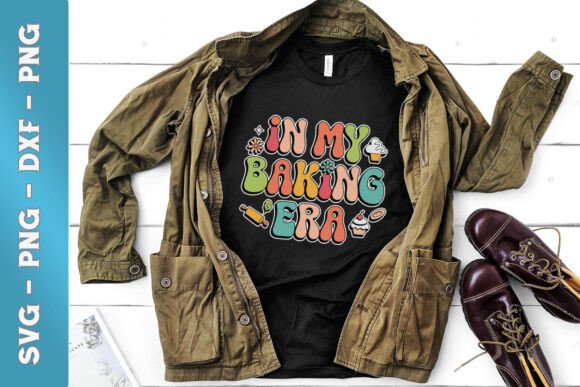
Right away, the Baker Mom Gift in My Baking Era SVG feels like a warm, playful nod to a trend that isn’t slowing down. The phrase “In My Baking Era” carries that comfortable, nostalgic energy that customers instantly connect with—especially when it’s paired with the words “Baker Mom.” As I pull the design up to evaluate it for real embroidery use, I’m not just looking at a cute graphic. I’m picturing how the lettering will sit on a tote bag, how the curves will translate into satin stitch, and whether the overall layout will hold up after a dozen washes on a kitchen towel. That’s the lens every embroidery designer, small shop owner, and Etsy seller needs to look through before committing to a project.
First Impressions and Design Personality
The mood is cheerful, slightly whimsical, and undeniably giftable. The typography has a friendly, hand-lettered feel that suggests movement without being messy. In a Crafts context, this kind of Graphics asset works beautifully because it already feels like a finished product idea—not just a standalone design file. The balance between the bold “Baker Mom” and the softer “In My Baking Era” likely creates a visual hierarchy that will read clearly even on fabric with a bit of texture. I immediately imagine it on a flour-dusted apron or peeking out from a linen tea towel at a craft fair. It’s the kind of design that makes a customer smile and reach for their wallet, because it feels personal and timely without trying too hard.
Real-World Embroidery Scenario: The Apron Test
I always test a design’s potential by running it through a realistic project in my head. This week, a client asked me to prepare a custom embroidered apron for her sister—a mom of three who just started a home baking business. She wanted something that felt boutique-quality but still playful enough for everyday wear. The Baker Mom Gift in My Baking Era SVG was the first thing I pulled up. I visualized the design stitched on the apron’s bib: the text would be digitized with a smooth satin stitch for the main letters, while a light fill stitch could handle any decorative accents. The phrase is long enough to stretch nicely across a 7x12 hoop, but I’d also consider a stacked layout for a smaller 5x7 hoop if the text needed to be condensed. The real test will be how the design’s details hold up on a cotton-poly blend apron that’s going to see a lot of rolling pins and oven heat.
Where This Design Truly Shines
After looking at the shape, theme, and detail level of the Baker Mom Gift in My Baking Era SVG, I can confidently say it’s a natural fit for a wide range of handmade products. Here’s where I’d use it without hesitation:
- Tote bag design – A canvas tote becomes an instant bridal shower gift or market bag with this bold, friendly text.
- Aprons and kitchen towels – The baking theme is unmistakable. A simple white flour sack towel with this embroidery becomes a bestseller at a craft booth.
- Sweatshirt embroidery – For a cozy, oversized sweatshirt, the design adds personality without overwhelming the garment. It works especially well on a left chest or center front placement.
- Pillow covers – A throw pillow with this design in a kitchen or breakfast nook creates instant charm.
- Holiday gifts – Mother’s Day, birthdays, or Christmas, this design fits neatly into seasonal gift guides.
- Custom apparel – T-shirts, hoodies, or even a baby onesie for a baking mom’s little one can carry this design with the right digitizing.
- Small shop merchandise – For a craft business, this design becomes a product line staple. It’s repeatable, recognizable, and easy to market.
In each of these applications, the design’s personality stays intact. It reads as a personalized gift even when it’s not customized with a name, because the sentiment feels specific and warm. That’s a huge advantage for Etsy sellers and boutique branding.
Fabrics and Projects That Demand Extra Caution
No design is a one-size-fits-all solution, and the Baker Mom Gift in My Baking Era SVG needs a thoughtful approach when you’re working with certain materials or product types. Through my own stitching trials, I’ve learned that text-heavy designs can become muddled if you’re not careful. Here’s where I’d slow down and test thoroughly:
- Small hoop sizes – If the design is scaled down to fit a 4x4 hoop, the lettering may lose readability. Fine details and thin strokes can close up under dense stitches.
- Textured fabrics – Terry cloth, fleece, or heavily napped fabrics can distort the clean edges of satin stitching. A knock-down stitch or a layer of wash-away stabilizer becomes essential.
- Thin or stretchy fabric – T-shirt material or lightweight knits need a cutaway stabilizer to prevent puckering around the lettering. Without it, the design can warp after the first wash.
- Dark fabric – The design’s visual impact depends on thread color contrast. On black or navy fabric, light thread colors will pop, but any dark-on-dark combination will make the phrase disappear. Always test on a scrap before committing to a finished product.
- Curved surfaces like caps – The long, horizontal layout may not conform well to a cap’s front panel without significant re-shaping. I’d rework the design into a stacked or arched version for curved surfaces.
- Layered garments – If the design is placed over a seam or a pocket edge, the embroidery can become uneven. I always hoop carefully and consider floating the item if needed.
These aren’t dealbreakers; they’re just the realities of working with a machine embroidery design that started as a cutting file. The original SVG gives you a clean vector path, but the digitizer must translate that into stitches that behave well on fabric. The sharper the original lines, the easier that translation is—and this design appears to have crisp, well-defined edges.
How the Design Affects Visual Appeal and Customer Trust
When a customer sees a finished product with the Baker Mom Gift in My Baking Era SVG stitched on it, they’re not just buying a tote bag or a sweatshirt. They’re buying the feeling of being seen, celebrated, and a little bit trendy. The emotional connection is immediate, and that’s what builds customer trust. A clean, well-executed embroidery of this design signals professionalism and care. It tells the buyer, “This maker pays attention to detail.”
On the other hand, if the stitching is dense and puckered, or if the thread breaks in the middle of a delicate serif, that trust erodes. The visual appeal of the design relies on consistent stitch quality, smooth curves, and appropriate thread color choices. I’ve found that using a soft cream or butter yellow thread on a natural linen background creates a vintage bakery feel, while a crisp white thread on a bold red apron gives it a modern, graphic punch. The design’s versatility in color adaptation is a strong asset for any craft business.
For Etsy sellers, the finished product photo matters immensely. A mockup showing this design on a neatly pressed apron or a folded tea towel can increase buyer engagement. The design’s friendly, readable typography photographs well, and that’s a subtle but important factor in a successful listing.
Practical Embroidery Designer Notes for Success
Based on my experience, here is a rundown of the steps I’d take before using the Baker Mom Gift in My Baking Era SVG in a client project or a shop product. These are not theoretical; they’re the actual checks I perform every time I work with a new digital design.
- Test the design on scrap fabric first. Always. I can’t stress this enough. Run a stitch-out on a fabric similar to your final product. Check for thread breaks, looping, and registration issues.
- Check thread color contrast. Hold the embroidered sample under different lighting. What looks great in the embroidery machine’s light may look washed out in a kitchen. Adjust the thread colors until the text pops clearly.
- Review stitch density. If the digitized version uses too many stitches, the fabric can become stiff or even develop holes. For a kitchen towel, I prefer a slightly lighter density so the towel remains soft and absorbent.
- Confirm hoop size. Measure the design’s outer dimensions after digitizing. Make sure it fits within your hoop’s embroidery field with at least a half-inch margin for the stabilizer.
- Inspect small details. Zoom in on any decorative flourishes. If there are tiny loops or very thin lines, they may need to be simplified or thickened to sew cleanly as a satin stitch or running stitch.
- Test in black and white mockups. Convert the design to a grayscale image to see if the value contrast holds up. This is especially helpful for judging how the design will look on solid-colored fabric.
- Compare light and dark fabric backgrounds. A design that looks perfect on white can look invisible on heather gray. Be prepared to adjust thread colors or add a light underlay stitch on dark fabrics.
- Use proper stabilizer. For most projects, a medium-weight cutaway stabilizer works well. For towels or stretchy fabrics, add a water-soluble topping to keep the stitches from sinking in.
- Check if the design works for both personal and commercial projects. The listing mentions it’s a digital cutting file for Cricut or Silhouette. You’ll need to digitize it yourself for embroidery, so confirm the licensing allows commercial use on finished products. Many SVG files are sold with a personal use license only, and reselling physical items made from the design may require an extended license.
- Confirm file compatibility before purchasing. Because this is a cutting file, not a pre-digitized embroidery file, you must be comfortable with the digitizing process. If you’re not, you can hire a digitizer, but always verify that the original designer permits derivative work for embroidery.
The Bottom Line for Craft Businesses and Makers
The Baker Mom Gift in My Baking Era SVG is more than a trendy phrase; it’s a thoughtful, well-shaped design that can easily become a staple in your handmade product lineup. From an embroidery perspective, it offers clean lines, a friendly layout, and a theme that customers genuinely want. I’d use it on a tote bag design without hesitation, and I’d confidently stitch it on a child’s apron for a baby shower gift. The key is to digitize it with attention to stitch type and density, and to choose your fabric and stabilizer wisely.
For the small business owner, this design can help build a cohesive brand story. Whether you’re selling at a farmers’ market, running an Etsy shop, or creating custom apparel for a bakery’s staff, a well-executed embroidery of this design communicates quality and care. It’s the kind of digital embroidery file that, once you’ve put in the digitizing work, becomes a reliable asset you’ll return to season after season. Just remember to test, adjust, and always keep the end user—the proud baker mom—in mind. That’s the difference between a product that gets a quick glance and one that gets a warm, “Oh, I need this!”