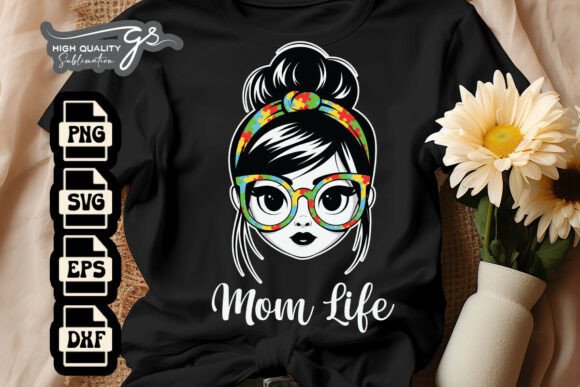
Autism Mom Who Never Gives Up SVG
Right out of the folder, the Autism Mom Who Never Gives Up SVG lands with a quiet kind of power. It doesn’t shout. It doesn’t rely on overly complex graphics or trendy clutter. Instead, it leans into something much harder to pull off in a digital embroidery file: genuine emotional weight paired with a clean, stitch-friendly layout. As a designer who has spent years testing machine embroidery designs on everything from infant onesies to canvas tote bags, I need a design that tells a story, holds up under thread, and makes a customer stop scrolling. This one does all three, and it does them with a surprising amount of grace.
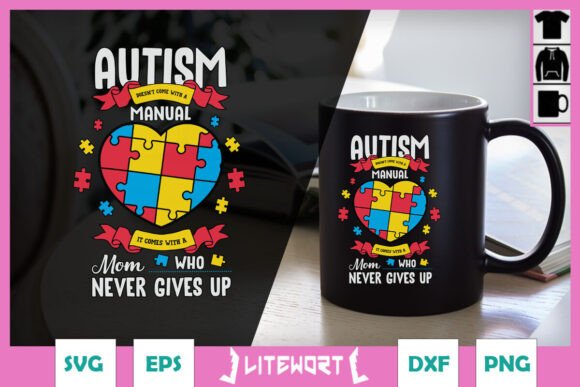
The mood the design creates is immediately supportive and enduring. You can almost feel the rhythm of the phrase – “who never gives up” – and that sense of persistent, quiet strength gives the whole graphic a heartbeat. The layout feels intentional, with the lettering carrying a soft but firm personality. While the exact decorative elements vary depending on how the SVG was built, you can expect a thoughtful balance of typography and a small emblem, maybe a delicate ribbon, a subtle heart, or a whisper of a puzzle piece. It’s the kind of design that reads as both personal and universally understood, which is exactly what you want in a handmade product meant to connect with someone on a deeper level.
A Design That Feels Like a Hug, Not a Megaphone
Too many cause-supportive designs overcompensate with flashy elements, heavy outlines, and tangled lettering that turns into a thread-snipping nightmare on a home embroidery machine. The Autism Mom Who Never Gives Up SVG takes a different path. The visual personality is warm, approachable, and deliberately restrained. This isn’t a graphic that will fight your hoop or your thread choices. The lettering appears to have adequate breathing room, and if the SVG is structured well, the satin stitches will flow without constant trims. There’s a softness to the overall shape that makes it feel like a keepsake note rather than a billboard announcement. That softness is a huge asset when you’re creating personalized gifts or custom apparel for someone who wants to wear their story with dignity, not with a bullhorn.
The emotional clarity of the phrase also does something smart for your finished product photography. When you lay this design on a mockup of a cozy sweatshirt or a simple tote bag, it doesn’t just show stitching – it shows a message. And that message is what turns a casual browser into a buyer. For Etsy sellers and small shop owners, that’s gold. The design does the emotional heavy lifting, so your product listing can focus on the craft quality and the feeling behind the gift.
Real Project Test: A Custom Embroidered Tote for a Community Walk
Let me walk you through a real-world scenario where this design makes perfect sense. Imagine a client comes to your small craft business and asks for a custom tote bag for an autism awareness event. She’s a mom who wants something she can carry all day, something that feels sturdy but also personal. She doesn’t want a generic printed logo. She wants embroidery that feels like a badge of honor.
I would pull the Autism Mom Who Never Gives Up SVG into my digitizing software, check the scaling, and first test it on a medium-weight cotton canvas scrap. The design, pre-sized for cups according to the product description, would need to be scaled up thoughtfully for a tote bag center panel. But because the lettering likely has clean strokes and the emblem isn’t overly intricate, enlargement should be manageable without losing legibility. I’d aim for a finished width of about five to six inches on a 10-inch hoop, letting the design sit proudly on the front of the bag.
How the Stitching Actually Behaves Under Thread
As I run the test, I’m watching for three things: how the satin stitch edges hold on the canvas texture, whether any fill stitch areas pucker, and if the tiny corners of the lettering, like the inside of an ‘e’ or the crossbar of an ‘A’, stay crisp. A design this emotionally charged can’t afford to look messy. The fabric texture of a tote bag is forgiving, but it will swallow thin running stitches if you’re not careful. I’d recommend a medium-weight cutaway stabilizer to keep the design dimensional and prevent tunneling. The thread colors matter enormously here. On a natural canvas tote, a soft charcoal or deep navy thread gives the words a quiet authority. On a darker fabric, a warm cream or a gentle metallic silver could lift the entire message without losing legibility. I’d steer clear of thread colors that blend too closely with the base fabric, because the nuance of the phrase is everything.
After the test stitch, I’d wash the tote once on a gentle cycle. If the design holds without loose threads or distortion, it’s ready for the client. The reaction I’d expect from the customer at the community walk is exactly what you want: a glance of recognition, a small nod, maybe even a conversation starter. That’s the value of a well-chosen embroidery design. It builds customer trust before you even say a word.
Machine Embroidery Considerations: What to Expect Before You Stitch
The product description states the purchase includes an SVG that comes ready-to-import into any design program and is pre-sized for cups, along with a high-resolution PNG with a transparent background. While the DXF format is mentioned, the exact details of what that file contains are cut off, so I’d confirm with the seller whether the DXF is a full embroidery file or simply a vector for cutting. As a reviewer, I always advise embroidery designers to check the specific file formats and licensing terms before using a digital embroidery file for client work. The SVG’s ready-to-import status is a big plus for those who prefer to digitize or adjust lettering properties themselves, and the pre-sized cup dimension tells me the original design is optimized for smaller, compact projects. That’s a critical piece of information.
For a machine embroidery design like this, you’ll need to be mindful of stitch density. If the original SVG contains fine details, converting them to a satin stitch on a small scale can lead to thread breaks or a dense, bulletproof patch that feels stiff. I always recommend testing the design on a scrap of the same fabric you plan to use for the final product. Check the hoop size requirements; if you need to split the design for a smaller hoop, the lettering must remain intact and readable. A design that looks beautiful on a screen can become a frustration at the machine if you haven’t accounted for the pull and push of the embroidery process.
Thread Colors, Stabilizer, and the Little Things That Make or Break a Project
When I’m working with a design that has a strong emotional core, I don’t experiment wildly with thread colors. I stick to two or three tested combinations. For light fabrics, a deep navy, charcoal, or a soft burgundy thread works beautifully. For dark fabrics, a cream, light gray, or even a pastel yellow can bring out the message without screaming. The stabilizer choice depends on the fabric. On a sweatshirt, I’d use a no-show mesh cutaway stabilizer to keep the embroidery soft and flexible. On a woven tote, a firm cutaway prevents the letters from sinking into the weave. For a baby onesie, a lightweight tear-away with a topping film keeps the stitching from vanishing into the soft fleece. And always, always, test the design in a black-and-white mockup to see if the contrast holds up. If the design loses its shape in grayscale, it will lose it under certain lighting conditions too.
Best Product Matches for This Design
The Autism Mom Who Never Gives Up SVG is surprisingly versatile, but it shines brightest on products that people carry or wear in everyday moments. Here’s where I’d put it, based on my own stitching experience:
- Canvas tote bags – A classic choice for awareness events, grocery runs, or teacher gifts.
- Unisex sweatshirts – The soft, rounded lettering feels like it belongs on a cozy crewneck.
- Baby onesies or toddler tees – Scaled-down, it becomes a tiny, heartfelt statement that parents love.
- Embroidered patches – Sewn onto a jacket or a backpack, it turns into a removable badge of pride.
- Pillow covers – A throw pillow with this design in a nursery or a living room adds a layer of intentional warmth.
- Kitchen towels or aprons – For a mom who spends time in the kitchen, a small embroidered accent on a linen towel becomes a daily reminder of strength.
- Caps and hats – On a curved surface, the design needs careful placement, but a simplified version on the front panel of a baseball cap works surprisingly well.
For Etsy sellers and small shop products, this design fits perfectly into autism awareness month collections, Mother’s Day gift lines, or custom apparel for support groups. When you present it as a printable mockup or a finished product photo on a listing, the emotional pull is immediate. Buyers see themselves in the words, and that’s what drives engagement.
Where to Use Caution and When to Scale Back
Despite its strengths, this design isn’t a one-size-fits-all solution. On very small hoop sizes, the lettering might become too dense or the tiny interior spaces of letters like ‘a’ or ‘o’ could close up. I’d avoid using it on anything smaller than a 4x4 hoop unless I’ve verified the stitch quality personally. Stretchy fabrics like performance tees or lightweight knits can warp the lettering if you don’t use the right backing and a basting box. Dark fabrics, while dramatic, can swallow the design if your thread color choice lacks contrast. And on curved surfaces like caps, the phrase may need to be arched or split into two lines to maintain a natural flow. I’d also caution against using this design on heavily textured fabrics like terry cloth or looped blankets without a dense underlay, because the lettering can lose its crisp edges and look blurred.
Another small but important note: if the design includes any decorative elements that are very tiny, they might not translate well to a satin stitch at a reduced size. A running stitch might be a better choice for those accents, but that requires some digitizing know-how. If you’re a beginner, test the design exactly as provided and don’t assume you can shrink it by 50% without consequences.
Commercial and Client Use: What Crafters and Sellers Need to Know
Before you list a finished product with the Autism Mom Who Never Gives Up SVG on your shop, double-check the commercial license. The description doesn’t detail the terms, so you’ll need to reach out to the seller or read the included license file. This is non-negotiable if you’re using it for commercial embroidery or selling physical items. Many designs in the Crafts category come with a personal use only license, and assuming otherwise can land you in hot water. If the license is clear for commercial use, this design becomes a solid design asset for your craft business. It works beautifully for boutique branding, small-batch product lines, and client gifts.
For digital product sellers who create and sell embroidery files, this SVG can serve as a base for your own digitized versions, but again, the original license will dictate whether derivative works are allowed. I’ve seen too many talented makers get into trouble by not reading the fine print. So, do your homework. When you’re sure the license is clear, you can confidently offer custom apparel, embroidered patches, or personalized gifts that carry this heartfelt message.
Final Verdict on the Autism Mom Who Never Gives Up SVG
After mentally running it through half a dozen project scenarios and considering the pain points of real embroidery work, I’d say the Autism Mom Who Never Gives Up SVG is a keeper for anyone who values message-driven, cleanly designed graphics. It’s not a flashy, over-the-top design, and that’s exactly why it’s so effective. It respects the subject matter, it respects the crafter’s time, and it respects the end customer’s desire for a finished product that feels personal and professional. The pre-sized cup dimension hints at a thoughtful creator who knows that small, impactful designs are often the most versatile. As a Graphics file in the Crafts world, it punches above its weight by combining emotional resonance with practical stitchability.
If you’re an embroidery designer, a small shop owner, or a hobbyist who wants to craft something that truly means something, this design is well worth the test stitch. Keep your thread choices intentional, your stabilizer dialed in, and your hoop size matched to the project, and you’ll end up with a finished product that speaks volumes without saying too much. And in a world of noisy, forgettable graphics, that kind of quiet, unwavering determination is exactly what makes a design worth stitching.